What is the compartment design of the plastic toolbox
The compartment design of the plastic toolbox aims to optimize space utilization, improve tool classification and storage efficiency, while also considering convenience of access and structural stability. Its design forms are diverse and differentiated according to the size, purpose, and target user needs of the toolbox. The following provides a detailed analysis from multiple dimensions:
1、 Core
The compartment design of the plastic toolbox aims to optimize space utilization, improve tool classification and storage efficiency, while also considering convenience of access and structural stability. Its design forms are diverse and differentiated according to the size, purpose, and target user needs of the toolbox. The following provides a detailed analysis from multiple dimensions:
1、 Core types and structural characteristics of compartment design
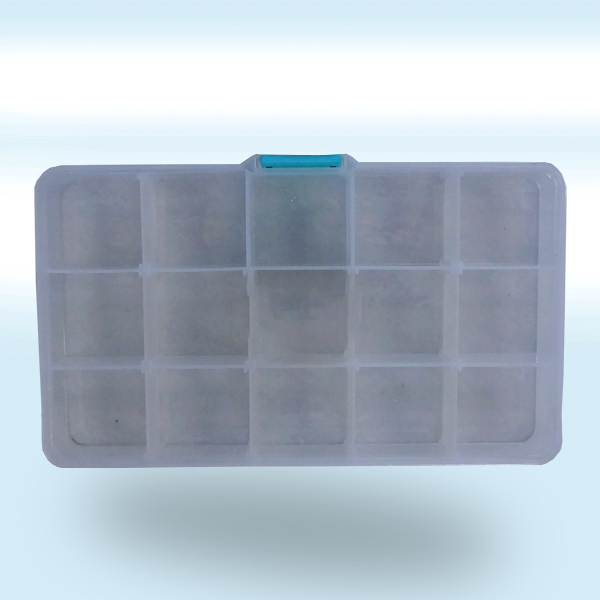
1. Fixed partition: standardized zoning
Structural features:
Adopting an integrated injection molding design with the box body, the position of the compartments is fixed and cannot be adjusted, commonly used in small toolboxes or specialized tool storage scenarios.
Typical applications:
Household toolbox: Divided into areas for conventional tools such as screwdrivers, wrenches, and tape measures, with dimensions pre-set according to common tool specifications (such as a screwdriver slot width of approximately 1.5cm and a wrench position depth of approximately 3cm).
Electrician toolbox: Fixed compartments separate wires, insulation tape, measuring pens, etc. Some compartments have anti slip patterns on the edges to prevent tools from sliding.
Advantages: Stable structure, low cost, suitable for scenarios with fixed tool types.
2. Detachable compartments: flexible combination
Structural features:
The compartment is connected to the box through slots, bolts, or buckles, and can be freely disassembled or adjusted in position according to the size of the tool. It is mostly designed in a modular manner.
Typical design:
Partition+slot structure: The inner wall of the box is equipped with horizontal/vertical slots (with a spacing of about 5-10cm), and the partition is inserted into the slot to form a partition. For example, in an auto repair toolbox, different sizes of sockets and wrenches can be separated as needed.
Grid base plate+divider plate: The base plate is equipped with grid shaped grooves (such as 5cm × 5cm squares), and the bottom of the divider plate has convex edges that can be stuck at any grid line, suitable for tools of different sizes (such as drills, pliers, etc.).
Advantages: Strong adaptability, able to adjust layout at any time according to tool updates, suitable for professional scenarios with diverse tool types (such as mechanical maintenance and construction).
3. Elastic partition compartment: flexible storage
Structural features:
Using elastic materials (such as rubber bands, elastic fabrics) or deformable structures, with tension fixing tools, suitable for storing irregular or small parts.
Typical applications:
Elastic mesh compartment: The top or side of the box is equipped with an elastic mesh compartment for storing small parts such as screws, nuts, washers, etc. The elasticity of the mesh compartment can adapt to different quantities of items.
Foam lining separation: high-density foam is cut into grooves according to the shape of tools (such as the outline of hand drills and hammers), and the tools are not easy to shake after being embedded, which is common in precision instrument tool boxes.
Advantages: Good shock absorption effect, suitable for protecting tool surfaces, and flexible adaptation to different shaped items.
2、 Functional optimization details of compartment design
1. Layered storage and space utilization
Top and bottom hierarchical structure:
Large toolboxes are typically designed with 2-3 layers of compartments, with the upper layer being a shallow compartment (5-8cm deep) for storing commonly used small tools such as screwdrivers and scissors; The lower layer is a deep compartment (10-15cm deep), which stores large tools such as wrenches and drills, and is separated by drawer or flip type partitions in the middle.
Vertical partition design:
Some toolboxes are equipped with vertical compartments on the side for vertically storing strip-shaped tools such as tape measures and level gauges, reducing horizontal space occupation.
2. Anti slip and shock absorption design
Surface treatment of interlayer:
Stick anti slip rubber pads or design raised patterns (such as diamond or grid patterns) at the bottom of the compartment to prevent tools from sliding; The precision tool compartment is lined with EVA foam, about 1-2cm thick, to reduce vibration damage during transportation.
Elastic buckle fixation:
For easily rolling tools such as compasses and drills, elastic plastic buckles are installed at the edges of the compartments to hold the tools and prevent displacement.
3. Modularity and Scalability
Drawer style compartment module:
Some toolboxes adopt drawer style compartments, with each drawer independently separated (such as screw area, wrench area, and tool area), which can be pulled out and used separately, suitable for scenarios that require quick access to tools (such as construction site operations).
Detachable expansion compartment:
Attach a small storage box to the main compartment using Velcro, snap fasteners, and other methods to store consumables such as screws and nails, expanding the storage function.
3、 Differences in Barrier Design in Different Scenarios
1. Household plastic toolbox
Design features: The compartments are simple and practical, with 2-3 fixed partitions that are suitable for daily tools such as screwdrivers, tape measures, and hammers. Some products are equipped with elastic mesh pockets to store small parts, with lower costs (such as styles priced at 50-100 yuan).
2. Professional auto repair toolbox
Design features:
Multi layer detachable compartments, combined with grid base plates and partition plates, freely divide storage areas for different specifications of sockets and wrenches (such as 10mm, 12mm, 14mm socket partitions).
Some products have dedicated compartments for placing special tools such as oil filter wrenches and spark plug sockets, with a depth of 15-20cm, suitable for large tools.
3. Electronic repair toolbox
Design features:
Shallow compartments and elastic partitions are the main features, with a depth of 5-8cm, suitable for storing small tools such as tweezers, multimeters, screwdriver sets, etc.
Some products use anti-static materials (such as ABS+anti-static coating), and the interlayer is lined with anti-static foam to protect electronic components from electrostatic damage.
4、 Trends and innovations in compartment design
1. Foldable and Lightweight: Some portable toolboxes adopt foldable compartments, which can be folded to save space during storage. After unfolding, they are fixed with buckles to form zones, suitable for outdoor work.
2. Intelligent identification: The edge of the compartment of the toolbox is equipped with a label slot, which can insert tool name labels for easy and quick positioning (such as "Allen wrench area" and "electric pen area").
3. Application of environmentally friendly materials: Some companies use recycled plastics to make compartments, combined with biodegradable plant fiber lining, to balance functionality and environmental protection needs.




 Home
Home
 Product
 Wechat
 Telephone